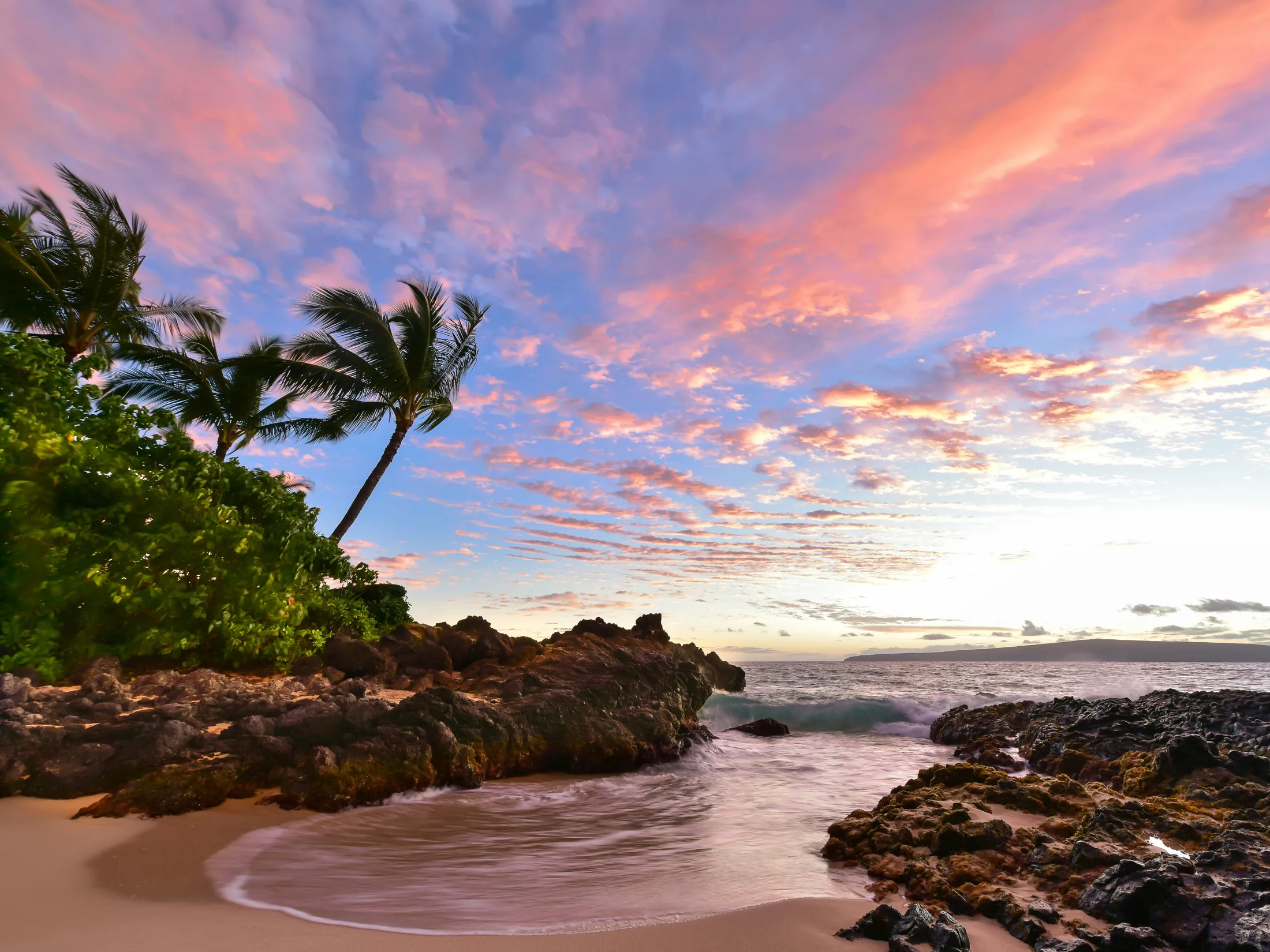


A good pre-trip watchlist should do two things at once: make the flight feel shorter, and make the island feel less like a postcard when you land.
For Maui, that means choosing carefully. The island has been used on screen as a luxury resort fantasy, a surf spectacle, a comic vacation backdrop, and a doorway into much older stories of Maui Nui — the larger island world that includes Maui, Molokaʻi, Lānaʻi, and Kahoʻolawe. Some titles are pure fun. Some are better watched with a little distance. A few help you see beyond the beach path and hotel lobby.
This is a tight watchlist for travelers who want to arrive with a sharper eye: for Wailea’s resort landscape, for the force of winter surf, for the outline of Kahoʻolawe offshore, and for the gap between “Hawaiʻi on screen” and Hawaiʻi as a real place.
Streaming availability changes often, so download early and check your platforms before the airport rush.
For the resort Maui you may recognize immediately
*The White Lotus*, Season 1
If you watch only one Maui-connected show before flying, make it this — not because it “explains” Maui, but because it understands the strange theater of a high-end Hawaiʻi vacation.
Season 1 was filmed at Four Seasons Resort Maui at Wailea, and the show makes full use of that polished South Maui world: oceanfront lawns, open-air lobbies, poolside rituals, sunset dinners, and the soft choreography of guests being cared for. The satire is not subtle, but it is useful. It lets you laugh at vacation behavior before you accidentally perform it yourself.
What makes it especially interesting for a Maui trip is the contrast. Wailea can be gorgeous, calm, and deeply comfortable, but it is also a highly designed visitor landscape. Watching *The White Lotus* before you arrive can help you see the resort zone as one version of Maui — not the whole island, and not a neutral stage set.
Best for: adults who like sharp social comedy, beautiful unease, and a little cringe with their mai tai.
*Modern Family*, “Hawaii” episodes
For lighter resort viewing, the *Modern Family* Hawaiʻi episodes are easy airplane comfort food. They are broad, sunny, and built around the familiar comedy of a family trip where everyone arrives with different expectations.
The Maui connection is part of the fun: the episodes were filmed in Wailea, including resort settings that match the fantasy many travelers have in mind before a first visit. The tone is sitcom-bright rather than observational, but that is exactly why it works as a pre-flight palate cleanser. You get the warm-weather anticipation without asking the show to carry cultural weight it was never built to hold.
Best for: families, nervous flyers, and anyone who wants a low-stakes half hour before landing.
*Just Go with It*
This Adam Sandler and Jennifer Aniston comedy is not subtle, and it is not trying to be. Its Maui scenes lean into the big-resort version of Hawaiʻi: pools, ocean views, lush grounds, and vacation absurdity turned up high.
Watch it for the same reason you might order fries at a hotel pool: not because it is profound, but because it scratches a very specific vacation itch. If your trip includes a South Maui resort stay, you may recognize the mood even when the plot goes full Hollywood.
Best for: an easy group watch when nobody wants subtitles, homework, or emotional devastation.
For ocean scale: surf, whales, and Maui beyond the itinerary
*Die Another Day* — the Peʻahi “Jaws” surf sequence
A James Bond movie is not where most people go for Maui context, but the opening surf sequence in *Die Another Day* has a real island-local reason to be here: big-wave footage connected to Peʻahi, also known as Jaws, on Maui’s north shore.
The movie uses the waves as spectacle, far removed from the patience, knowledge, and risk judgment that real big-wave surfers bring to that place. Still, the sequence is a useful reminder of Maui’s range. The same island that has calm morning beaches in South Maui also holds ocean energy that can look almost unreal.
You do not need to build a trip around seeing Peʻahi. For most visitors, it is better understood as part of Maui’s surf geography than as a casual sightseeing stop. But watching even a few minutes of big-wave footage changes how you look at the north shore on a winter swell day.
Best for: action fans, surf-curious travelers, and anyone who wants to feel Maui’s wild edge before arrival.
A good humpback whale documentary
If your Maui trip falls in whale season, add a humpback documentary to your queue. It does not need to be Maui-specific to be worthwhile. What matters is giving yourself enough context to understand what you may see from a boat, a lookout, or even a beach chair: blows on the horizon, tail slaps, breaches, mothers and calves moving through warm Hawaiian waters.
Maui is one of the places where whales become part of the daily rhythm during the right time of year. You hear people mention them at breakfast. You see boats turn and slow. You start scanning the horizon without thinking. A well-made whale documentary makes those moments richer without turning your vacation into a biology lecture.
Look for films that focus on humpback migration, communication, and calf behavior rather than sensational “close encounter” material. The quieter ones age better.
Best for: winter and early spring travelers, families, and anyone who wants the ocean to feel more alive before they see it.
For Maui Nui context: the islands you see are not just scenery
*Hawaiian Soul*
This short film is one of the most meaningful things you can watch before a Maui trip, especially if you will be staying in South or West Maui, where neighboring islands are part of the horizon.
*Hawaiian Soul* tells a story connected to George Helm, the musician and activist from Molokaʻi associated with the movement to stop the bombing of Kahoʻolawe. For Maui travelers, the geography matters. Kahoʻolawe sits offshore from South Maui. Lānaʻi and Molokaʻi are visible from many West Maui viewpoints. These islands are often treated by visitors as sunset silhouettes, but they are part of a living political, cultural, and family landscape.
The film is short, but it opens a door. It gives emotional shape to a place many visitors see without knowing what they are looking at.
Best for: travelers who want a compact, thoughtful watch with real relevance to Maui’s surrounding waters.
*Waterman*
*Waterman* is not a Maui film in the narrow location-scout sense. It is a documentary about Duke Kahanamoku — Olympic swimmer, surfer, and one of the central figures in the global story of modern surfing. Its center of gravity is broader Hawaiʻi, but it belongs on a Maui watchlist because ocean culture will be all around you here, whether you surf or not.
Before a Maui trip, the film helps separate surfing from the thin version often sold to visitors: a board, a tan, a logo, a lesson. It places surfing and swimming inside a longer Hawaiian and international story, with Duke as an athlete, ambassador, and complicated public figure.
Watch it before you take a surf lesson, before you spend a morning watching longboarders at a gentle break, or before you find yourself wondering why the ocean seems to organize so much of island life.
Best for: ocean people, history-minded travelers, and anyone planning to surf for the first time.
For old Hollywood Hawaiʻi — useful, but watch with distance
*Hawaii*
Older Hollywood films about Hawaiʻi can be strange pre-trip viewing. They may include island scenery, period costumes, and big emotional music, but they also carry the assumptions of the era that made them. *Hawaii*, the 1960s epic based on James Michener’s work, is worth considering only if you enjoy historical Hollywood and can watch it as a time capsule rather than a guide.
For a Maui traveler, the value is less “spot the location” and more “notice the lens.” Mid-century productions helped shape mainland fantasies about Hawaiʻi: romance, mission history, exoticism, tragedy, paradise. Some of those ideas still echo in tourism today, even when the packaging looks more modern.
Best for: film-history people and travelers who like watching old movies with a critical eye.
If you are tempted to watch *Moana*
It is perfectly reasonable to watch *Moana* on the plane, especially with kids. The music travels well, the ocean animation is beautiful, and the character of Māui will probably make younger travelers ask questions before you land.
Just keep one distinction clear: *Moana* is not “about Maui” the island. It draws from a broad Polynesian imaginative world, and its Māui is a Disney character, not a visitor’s shortcut to Hawaiian tradition. Enjoy it for what it is — a family film with memorable songs — and let it spark curiosity rather than stand in for cultural understanding.
Best for: families, especially if you pair it with a few honest words about the difference between a movie character and a real place.
What to notice once you arrive
The pleasure of a Maui watchlist is not just recognizing a hotel lobby or a stretch of coastline. It is noticing how many Mauis can exist at once.
There is the resort Maui of Wailea, manicured and fragrant after the sprinklers run. There is the north shore Maui of wind, red dirt, and serious water. There is Upcountry, where the island cools and opens. There is Haleakalā above the cloud line. There is Hāna, too often reduced to “the road” rather than understood as a community at the far end of one. There are the neighboring islands in view, each with its own story.
Films and shows can make you excited for the trip, but they can also narrow your gaze if you let them. Use them as mood-setters, not maps. The best moments on Maui usually arrive without a soundtrack: the first time the air changes as you drive uphill, the sound of palms at night, the quick silver flash of a whale’s back offshore, the way sunset catches Kahoʻolawe and makes everyone go quiet for a minute.
That is the real reason to watch before you fly. Not to arrive with trivia, but to arrive already paying attention.

Further Reading
A few relevant next steps from Alakai Aloha.
 GuideBest Beaches on Maui: Swimming, Snorkeling & Sunsets
A guide to best beaches on Maui.
Editor's pick StayFour Seasons Resort Maui at Wailea
A large luxury beachfront resort in Wailea with spacious accommodations, full-service amenities, and direct access to South Maui’s resort corridor. It’s best suited to travelers who want a high-service stay with pools, dining, and beach access on site.
Editor's pick ActivityPeahi
Peahi, also known as "Jaws," is Maui's legendary big-wave surf break where elite surfers challenge colossal swells, offering a thrilling spectacle during winter months for prepared visitors.
Editor's pick BlogWhat to Watch and Read Before Your Maui Trip
A thoughtful Maui watch-and-read list to add context to Lāhainā, Haleakalā, resort culture, land, water, and the stories behind the places you’ll visit.
Editor's pick