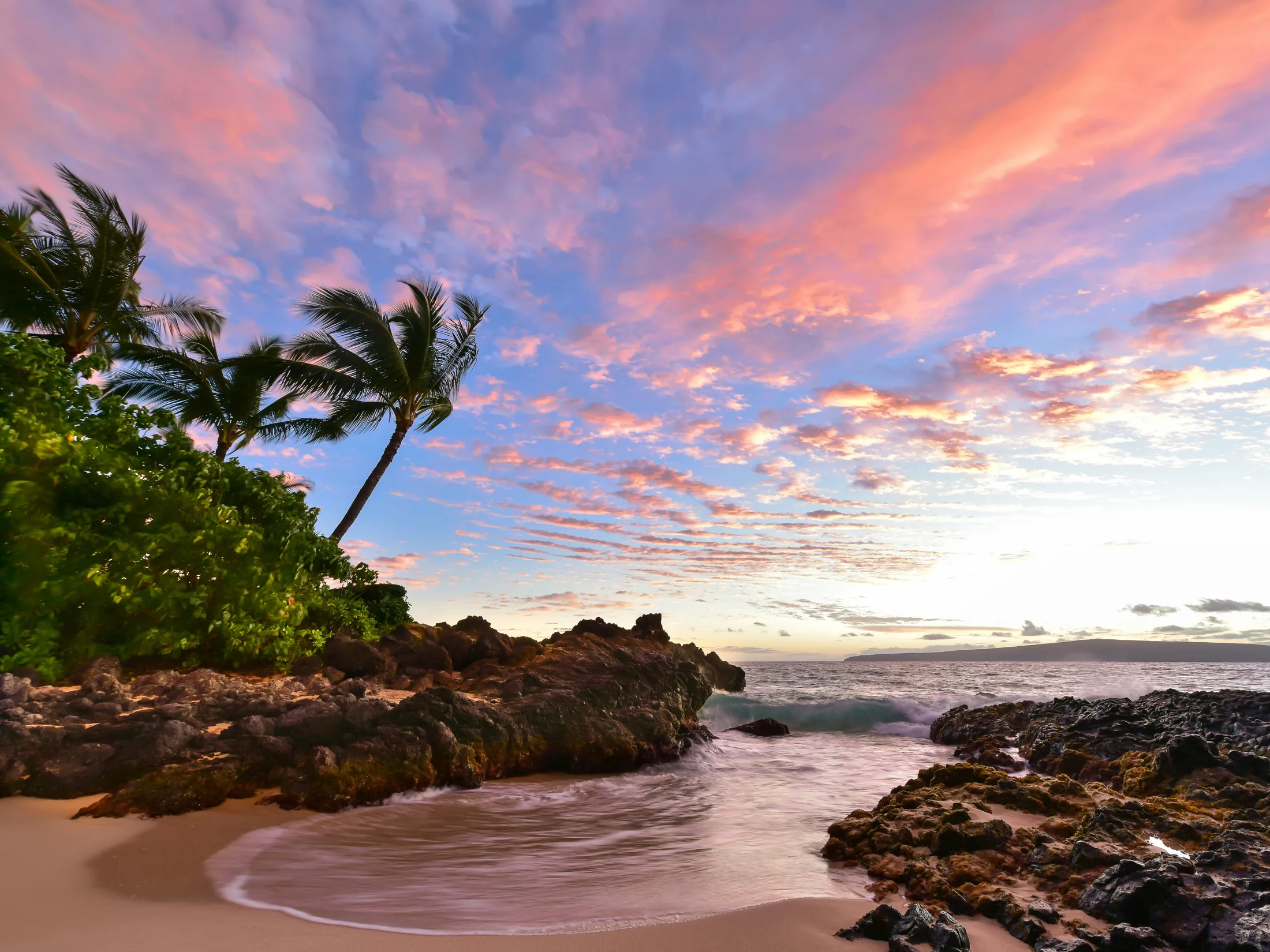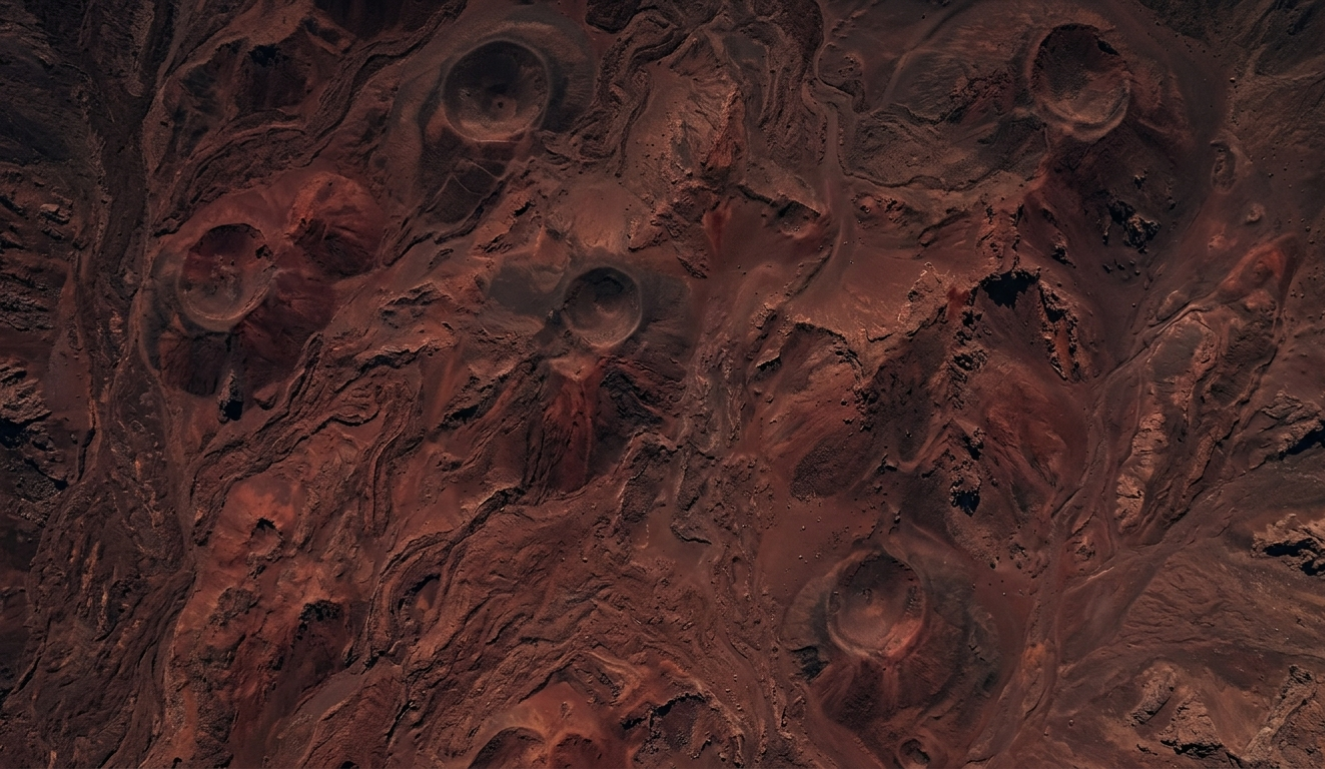


Moʻolelo are not just “legends” in the souvenir-shop sense. In Hawaiʻi, the word can hold story, history, genealogy, memory, warning, explanation, humor, and place-based knowledge all at once. On Maui, that matters because many of the island’s most visited landscapes already carry story: Haleakalā at sunrise, the wet windward valleys of Hāna, ʻĪao’s green walls, the lava fields of South Maui.
A good Maui trip does not require you to become an expert in Hawaiian literature. But if you learn even a little before you go, the island changes. A crater becomes more than a photo location. A place name starts to feel like a clue. A performance of hula becomes not just entertainment, but a living way of keeping knowledge in motion.
The best approach is simple: listen for the place, accept that there may be more than one version, and learn from people and institutions that treat the stories as more than content.
On Maui, story begins with the landscape
Maui’s moʻolelo often feel inseparable from the island’s shape: the high summit of Haleakalā, the central valley between mountain masses, the wet east and drier leeward shores. The stories are not random decorations placed on scenery. They help explain relationships — between people and weather, chiefs and land, family and obligation, gods and natural forces.
That is why the same story can shift depending on who tells it, where it is being told, and what the teller is trying to emphasize. Oral traditions are not weak because they have variations. The variation is part of the life of the tradition.
For visitors, that means it is better to say “in one telling…” than to flatten a moʻolelo into a single definitive plot. It also means Maui’s stories are best learned close to their places, with enough humility to leave some things unclaimed.
Māui, Hina, and Haleakalā
The island shares its name with one of the best-known figures in Polynesian traditions: Māui, the clever, restless demigod whose stories appear across the Pacific in different forms. On Maui, the moʻolelo many visitors encounter is the snaring of the sun at Haleakalā.
In many tellings, Māui’s mother, Hina, is frustrated because the sun moves too quickly across the sky. There is not enough daylight for her kapa to dry. Māui climbs to the summit and snares the sun, forcing it to slow its path and give people longer days.
You can hear this as a charming explanation of daylight, and it is that. But on Maui, it is more satisfying as a story about work, family, skill, and negotiation with forces larger than oneself. Hina’s labor matters. The making of kapa matters. The sun is not scenery; it is a power with which people must have a relationship.
Hina is not merely background to Māui’s adventures. Across Hawaiian and wider Polynesian traditions, she appears in many forms and associations — with kapa, moon, water, fertility, and skilled work, depending on the telling. Remembering her helps restore balance to the Haleakalā story: the feat responds to a practical need.
That is one of the pleasures of learning moʻolelo on Maui. The stories can be cosmic and grounded at once. They may involve gods, demigods, and extraordinary acts, but they also stay close to food, cloth, rain, wind, fishing, growing, and the daily work of keeping life going.
Many visitors go to Haleakalā for sunrise or sunset, and the experience can be gorgeous even when clouds take over the view. But the name itself — often translated as “house of the sun” — invites a different kind of attention. You are not simply standing at a high lookout. You are in a landscape where time, light, and story have been braided together for generations.
Pele traditions and Maui’s volcanic places
Pele, the volcano deity, is most closely associated today with Hawaiʻi Island, especially Kīlauea. But traditions of Pele also move across the island chain, and Maui has its own volcanic landscapes where visitors may encounter references to her and her family.
This is an area where it is worth being careful with sources. Pele stories are widely repeated, sometimes loosely, and not every dramatic version online is grounded in Hawaiian tradition. If you are exploring Maui’s lava fields, Haleakalā’s volcanic terrain, or interpretive material about the island’s formation, look for sources that treat Pele traditions with cultural seriousness rather than turning them into spooky campfire tales.
Lava landscapes on Maui can look barren at first, then reveal tiny plants, rough textures, color, heat, and ocean exposure. Moʻolelo can help you see those places as active cultural landscapes, not empty rock.
ʻĪao Valley: when moʻolelo includes history
Not every Maui story that matters is a supernatural legend. Moʻolelo also carries history, including hard history.
ʻĪao Valley in Central Maui is one of the most accessible places where visitors sense this quickly. Its steep green walls and the famous ʻĪao Needle draw people in, but the valley is also associated with chiefly history and the Battle of Kepaniwai, a major conflict during the period of Kamehameha I’s campaigns to unite the islands.
That history is often summarized too quickly for visitors: a scenic stop, a short walk, a dramatic battle note, back to the car. But ʻĪao rewards a slower read. It is a place where beauty and violence, freshwater and political power, memory and tourism all occupy the same valley.
You do not need to turn your vacation into a seminar to honor that complexity. Just resist treating ʻĪao as only a backdrop. Read what is available on-site or through reputable Maui history sources. Notice how the valley holds sound and weather. Let the place be heavier than a viewpoint.
East Maui and the patience of story
The road to Hāna is one of Maui’s most famous visitor experiences, but it is also one of the easiest places to miss the point. People count waterfalls, mile markers, banana bread stops, and photo pullouts. The deeper rhythm of East Maui is slower: rain, taro, stream, ocean, cliff, forest, family land, and stories that belong to particular places.
Hāna and the surrounding districts are not a theme park of “old Hawaiʻi.” They are living communities. That distinction matters when learning moʻolelo. Some stories are appropriate for public sharing; others may be family-, place-, or practitioner-specific. A visitor’s job is not to collect them all. It is to learn what is offered well.
If your plans take you to East Maui, consider building in one or two experiences that provide real context rather than simply adding more stops. A garden, cultural site, museum exhibit, guided program, or locally grounded talk can make the entire drive feel different. You may still swim, snack, and take photos. But the day becomes less about consuming scenery and more about understanding why the landscape has depth.
Where to learn Maui moʻolelo with better footing
The most trustworthy learning usually happens through museums, cultural practitioners, hālau, Hawaiian-language and history publications, park interpretation, and community-rooted programs. On Maui, you can begin with places and experiences like these, depending on what is available during your trip:
Hale Hōʻikeʻike at the Bailey House in Wailuku for Maui history, material culture, and a stronger foundation than most quick online summaries can offer. Haleakalā National Park interpretation for cultural context tied to the summit and Kīpahulu areas, especially when you want to understand the mountain as more than a scenic destination. Maui Arts & Cultural Center performances and cultural programming when hula, chant, music, or storytelling are presented in a setting that gives the work room to breathe. East Maui cultural and garden experiences, when offered, for a more grounded understanding of Hāna-side landscapes, plants, and place-based knowledge. Local bookstores and libraries for Hawaiian history, ʻōlelo Hawaiʻi resources, and publications by scholars, kumu, and community historians.
Hours, programs, and access can change, so treat this as a direction rather than a fixed itinerary. Choose quality over quantity. One well-interpreted hour can do more than a day of shallow stops.
Let Maui be more than a setting
The easiest mistake is not obvious disrespect. It is overconfidence — hearing one short version of a moʻolelo and repeating it as if you now own it.
A better habit is to keep the source attached. “A ranger interpretation explained it this way.” “At the museum, I learned one version of the story.” “A hula performance referenced this moʻolelo, but I don’t know the full tradition.” That kind of language is honest, and it leaves room for the story to remain larger than your summary.
Photos are usually the least important part of this kind of learning. Take them where it is appropriate, of course. But some of the best moments will not be photogenic: a phrase in a chant you do not fully understand, a museum label that corrects an assumption, a windy pause at Haleakalā, the feeling that a valley is not empty simply because you arrived without context.
Moʻolelo do not make Maui “more magical.” That phrase is too small. They make the island more intelligible — not fully knowable to a visitor, but less flat.
You will still have a vacation. You will still want the beach day, the good meal, the clear morning, the swim that makes the whole trip feel worth it. But if you make room for Maui’s stories, the island starts to meet you differently: not as a collection of attractions, but as a place with memory, and with people still carrying that memory forward.
Further Reading
A few relevant next steps from Alakai Aloha.
 BlogExperiencing Maui Heiau and Hula With Respect
A thoughtful Maui guide to visiting heiau, understanding hula, and experiencing Hawaiian traditions with care, context, and respect.
Editor's pick ActivityHaleakalā National Park
Explore Haleakalā National Park, encompassing the dormant volcano's summit for breathtaking sunrises, sunsets, and stargazing, alongside the lush Kīpahulu District's waterfalls and pools.
Editor's pick ActivityRoad to Hana
Embark on an iconic 64-mile scenic adventure along Maui's northeastern coast, navigating winding roads through lush rainforests, past cascading waterfalls, and dramatic sea cliffs on this full-day exploration.
Editor's pick Hawaii-wide guideWhat the Aloha Spirit Really Means
“Aloha” is one of the first Hawaiian words many travelers learn, and one of the easiest to flatten.
Editor's pick