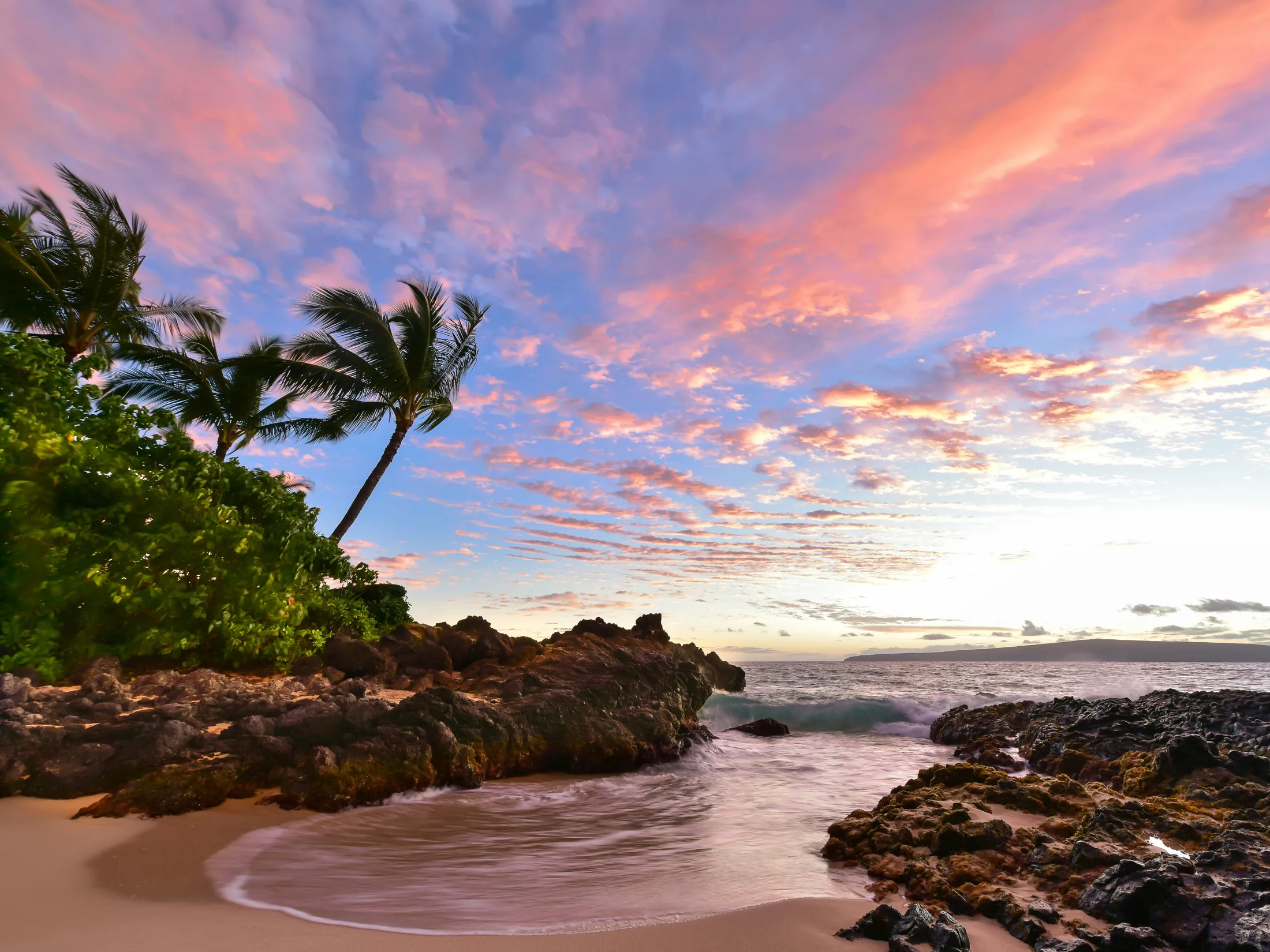


Maui works for teens because it does not force a choice between a nature trip and a vacation trip. They can surf in the morning, eat fish tacos in beach clothes, vanish into a resort pool for two hours, browse a small town, and still have a mountain or coast-road day waiting when everyone is ready.
The trick is not to turn Maui into a family achievement test. Older kids usually do best with a rhythm: ocean mornings, one or two signature adventures, casual food, and enough unplanned time that nobody feels managed every minute.
First decision: South Maui or West Maui?
For families with teens, where you stay matters less for luxury and more for daily friction.
South Maui — Kīhei, Wailea, and nearby beaches — works well if your family wants easy beach days, beginner surf lessons, casual food, and relatively simple access to Upcountry, Haleakalā, and Māʻalaea. Kīhei has condos, beach parks, breakfast spots, shave ice, and enough walkable pockets for teens to feel a little independent. Wailea is more polished and resort-oriented, with beautiful beach paths and a quieter evening mood.
West Maui — especially Kā‘anapali, Napili, Kahana, and Kapalua — is better if your teens like resort energy, long beach walks, shopping and food clusters, and boat-day convenience. Kā‘anapali gives older kids more to do without getting in the car every time: beach, path, shops, snacks, sunset, repeat.
Neither side is “better.” South Maui often feels easier for active, beach-hopping days. West Maui often feels easier when the resort zone itself is part of the entertainment.
Match the trip to your teen
Some teens want constant motion. Some want to sleep until the last possible minute. Some care more about snacks than scenery. Maui can handle all of them, but not with the same itinerary.
If your teen wants to be in the water every day, South Maui is an easy place to start. Kīhei is a common base for beginner surf lessons, with Cove Park often used for learning conditions when the ocean cooperates. A lesson early in the trip gives teens a skill, a little confidence, and usually a better appreciation for reading waves and spacing.
Snorkeling can be as simple or as involved as your family wants. Some families rent gear and choose calm shore conditions. Others prefer a boat trip, where the logistics are handled and teens get the feeling of a bigger outing. Either way, make snorkeling a morning plan when possible. Maui afternoons often invite a slower pace, and teenagers rarely complain about being released back to the pool, beach, or snacks by midafternoon.
Do not promise perfect snorkeling. Wind, swell, visibility, and comfort level can change the experience. Present it as “we’ll pick a good morning and see what the ocean gives us,” and the day tends to go better.
Some older kids do not need seven activities. They need a good beach, decent food within walking distance, Wi-Fi when they want it, and parents who are not hovering. Kā‘anapali is particularly good for this style of trip. The beach path, Whalers Village, resort pools, and casual dining options create a vacation loop that teens can understand quickly. It is not independent travel, exactly, but it gives them room to move in a contained area.
Wailea can work similarly, just with a quieter tone. The beach walk is beautiful, the resorts are spread out, and evenings feel more relaxed than busy. If your teen likes dressing up a little for dinner, taking photos at sunset, and having slow mornings, Wailea can be a very good fit.
The best parent move here is to stop treating downtime as wasted time. On Maui, a day that includes a late breakfast, two hours at the beach, an afternoon swim, and a simple dinner can be exactly right.
Use towns as reset buttons
Maui’s small towns are useful when everyone needs a break from sand and sunscreen.
Pāʻia has surf-town energy, casual food, boutiques, coffee, and people-watching before or after a North Shore stop. It works best when you are not trying to park, eat, shop, and make a tight reservation immediately after.
Makawao gives a different mood. Upcountry air, small shops, galleries, and a slower pace make it a nice counterpoint to resort Maui, especially on a Haleakalā day or a non-beach afternoon.
Kīhei is less quaint and more practical, which is often exactly what teens want: casual food, beach parks, shave ice, quick errands, and a lower-pressure feel.
Food planning with teens does not need to be elaborate. One nicer dinner is plenty for many families. The rest of the time, build around casual meals, takeout, and snacks in the room or car. Maui days go better when the next meal is not a mystery.
The two big Maui days: Haleakalā and Hāna
Maui has two classic “big day” experiences that tempt families: Haleakalā and the Road to Hāna. Both can be memorable. Both can also be too much if you stack them carelessly.
Haleakalā National Park is one of Maui’s defining places, with summit landscapes, hiking, and a sense of scale that feels very different from the coast. The summit is high, cool, and otherworldly — a true change of scene.
Sunrise gets the attention, but it is not automatically the best choice for families with teens. The wake-up is very early, and some older kids will spend the first half of the day silently resenting everyone. If your teen is genuinely excited, sunrise can be special. If not, consider a daytime or sunset visit instead. You still get the mountain, the temperature shift, the views when conditions allow, and the feeling of having left beach Maui for a while.
Pairing Haleakalā with Upcountry makes sense. Add Makawao browsing, a casual meal, or a slow drive through the higher elevations. Do not pair it with a late night before or a major ocean activity after unless your family has unusual stamina. Bring layers; the summit is not beach weather.
The Road to Hāna is less a single attraction than a full-day mood: curves, rain forest, waterfalls, coastal views, snacks, and a lot of time in the car. Some teens love the cinematic quality of it. Others get carsick, bored, or irritated by repeated stops.
Before you commit, ask the honest question: does your family enjoy long scenic drives? If yes, make it a full-day plan and keep expectations loose. If no, you are not failing Maui by skipping it.
For many families, the best Hāna strategy is restraint. Start early, choose fewer stops, bring food and water, and do not turn the day into a scavenger hunt. The reward is the drive and the landscape, not the number of places you can mark off.
A realistic five-day shape
Use this as a starting shape, not a script.
Day 1: Arrive and keep it easy Check in, swim, walk the beach, get casual dinner. If you arrive early and want something structured, Maui Ocean Center can work well. Resist the urge to start with a major drive.
Day 2: Ocean morning Book a surf lesson in Kīhei or plan a calm morning snorkel. Keep the afternoon open for pool time, beach time, or wandering near your base.
Day 3: Upcountry and Haleakalā Sleep normally unless your family truly wants sunrise. Head Upcountry, spend time around Makawao or Pāʻia depending on your route, and visit Haleakalā in a way that fits your energy.
Day 4: Choose your big adventure This is your Road to Hāna day, boat day, zipline-style adventure, or longer beach exploration. Pick one. Do not combine two “big” Maui ideas just because they look close on a map.
Day 5: Let the island breathe Return to the beach your teen liked most. Browse Whalers Village if you are in West Maui, eat your way through Kīhei if you are in South Maui, or do one last North Shore or Upcountry loop if your flight timing allows. End with a sunset, not a forced finale.
For a full week, add one true rest day and one flexible day. That extra space is often what turns a good teen trip into a family vacation people remember fondly.
Maui planning gets easier when teens choose between good options instead of being handed a finished itinerary: surf lesson or snorkel boat, Haleakalā sunset or Road to Hāna, Pāʻia browsing or resort afternoon, nice dinner or casual food crawl, big activity tomorrow or sleep-in beach day.
Older kids usually respond better to ownership than persuasion. Give them a say, feed them before they crash, and avoid scheduling every sunrise and sunset like a production. With teens, the best Maui days are often the loose ones: saltwater in the morning, a car snack at the right moment, a town you did not over-research, and a plan that leaves room for everyone to come back to themselves.

Further Reading
A few relevant next steps from Alakai Aloha.
 BlogMaui With Teens, Without the Daily Hike
Keep teens engaged on Maui with surf lessons, snorkel boats, small towns, scenic drives, beach time, and flexible days that do not revolve around hiking.
Editor's pick BlogMaui with Kids, Teens, and Grandparents
Plan a smoother Maui trip for toddlers, teens, parents, and grandparents with the right home base, flexible days, easy meals, and outings everyone can enjoy.
Editor's pick BlogMaui Movie Nights Before a Family Trip
A family-friendly Maui watchlist that helps kids picture the ocean, reefs, Haleakalā, whales, and island weather before the trip begins.
Editor's pick GuideBest Tours and Things to Do on Maui
A guide to best Maui tours.
Editor's pick