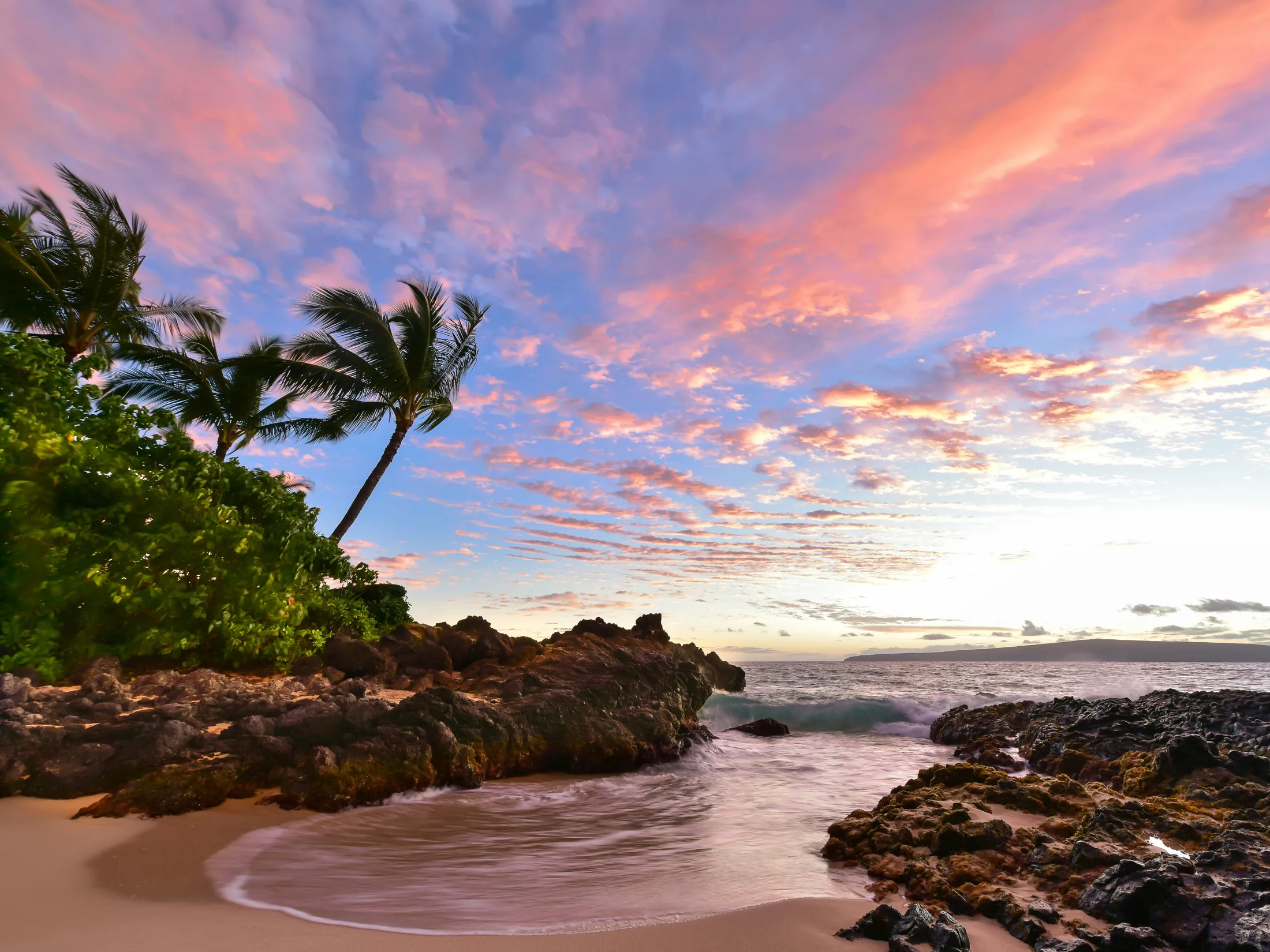


Choosing where to stay on Maui is less about finding the “best” part of the island and more about choosing the rhythm you want to wake up in.
Maui looks compact on a map, but its regions feel distinct. A beach-resort morning in Wailea is not the same trip as coffee on a cool Kula hillside, an early start from Pāʻia, or a sunset walk in Kāʻanapali. Roads often funnel through the same corridors, weather changes by slope and coastline, and a “quick” day trip can become the whole day if you base yourself on the wrong side for what you care about most.
If you want the short version:
Choose South Maui for reliable beach weather, easy swimming days, and a polished vacation feel. Choose West Maui for resort comfort, sunset coastline, snorkeling coves, and a classic Maui beach base. Choose Central Maui if you care more about logistics than resort atmosphere. Choose the North Shore for surf-town energy, independent stays, and easier starts toward Hāna. Choose Upcountry for cooler air, Haleakalā access, farms, quiet mornings, and a less beach-centered trip. Choose Hāna for a short, intentional stay — not as a base for exploring the rest of Maui.
The right answer depends on whether your days are built around beaches, food, driving, hiking, rest, or simply not spending your vacation in the car.
South Maui: Kīhei, Wailea, and Mākena
South Maui is the easiest recommendation for many first-time Maui travelers because it gives you what people often picture when they book the island: dry leeward weather, long beach days, sunset dinners, and plenty of lodging choices.
Kīhei is the more casual, practical side, with condo complexes, beach parks, shave ice runs, grocery stops, and a lived-in vacation rhythm. Wailea is more manicured, with resort grounds, spas, golf, oceanfront paths, and higher-end dining. Mākena, farther south, feels more open and less built-up, where the developed coast begins to give way to lava rock, kiawe, and wide sky.
South Maui is especially good if your trip depends on sunshine. No coastline is guaranteed perfect weather every day, but this side is one of Maui’s drier visitor areas, and that matters when your plans are simple: beach, swim, read, repeat.
The tradeoff is that South Maui can feel removed from some of the island’s big driving days. Haleakalā sunrise, the Road to Hāna, and West Maui outings all require early starts and patience. It is not a bad base for exploring, but it works best when your main vacation is the south shore itself.
Stay here if you want a beach-forward trip with good amenities, especially if you like the choice between casual Kīhei and more polished Wailea.
West Maui: Kāʻanapali, Nāpili, Kapalua, and the Lāhainā Area
West Maui has long been one of the island’s signature resort regions, with a coastline that shifts from broad resort beaches to smaller bays and greener northern slopes. Kāʻanapali offers the most developed resort feel, with hotels, condo resorts, shopping, restaurants, and a long beach walk. Nāpili and Kapalua feel quieter and more tucked into the northwest coast, with smaller bays, golf, and a more residential vacation pace.
This side is a strong choice if you want to settle into a resort or condo and not overcomplicate the day. Swim in the morning, snorkel if conditions are right, have lunch nearby, watch the light change over Lānaʻi and Molokaʻi, and do it again tomorrow. Families often like West Maui because pools, beach access, restaurants, and activities sit close together.
The tradeoff is distance. West Maui is connected to the rest of the island by limited road corridors, and drives to South Maui, Haleakalā, the airport area, or the start of the Hāna Highway can take more energy than visitors expect. If your itinerary is full of pre-dawn departures and island-wide exploring, West Maui may feel less convenient than it looks on a map.
Around Lāhainā, choose confirmed open lodging and businesses, and keep plans flexible as the region continues its recovery from the 2023 fires.
Stay here if you want resort ease, west-facing sunsets, and a vacation centered on the northwest coast rather than constant island-crossing.
Central Maui: Kahului and Wailuku
Central Maui is not where most people go for the dreamy resort version of Maui. That is exactly why it can be useful.
Kahului and Wailuku put you near the island’s main airport, major roads, everyday services, and the practical middle of Maui. If you are arriving late, leaving early, traveling for work, trying to keep costs down, or planning a short stay with lots of movement, Central Maui can make sense. You are better positioned for Upcountry, the North Shore, ʻĪao Valley, South Maui, and the road toward Hāna than you would be from the far west side.
Wailuku has more historic texture and local-town character; Kahului is more utilitarian. Neither is primarily a beach-resort base. You give up the easy pleasure of walking from your room to a sunset swim, but gain shorter first and last days, easier errands, and less commitment to one coast.
Stay here if your trip is active, brief, budget-conscious, or logistics-driven. If you want the romance of Maui at your doorstep, choose another region.
North Shore: Pāʻia, Haʻikū, and the Road Toward Hāna
The North Shore is for travelers who like their Maui with wind in it.
Pāʻia is the best-known town on this side: small, busy, colorful, and close to famous surf and windsurfing stretches. Haʻikū and the surrounding areas are greener and more residential, with vacation rentals and small inns rather than large resorts. This region gives you easier access to the start of the Hāna Highway, Upcountry roads, and a different mood from the leeward resort coasts.
The North Shore is not the best fit if your dream is calm-water swimming every day. Ocean conditions here can be powerful, especially in winter, and many beaches are better for watching skilled waterpeople than for casual floating. It can also be windy, which is part of the appeal for some visitors and a drawback for others.
Where the North Shore shines is in its sense of movement. You wake up closer to the day’s adventure: a drive toward Hāna, a morning in Makawao, a stop at a farm stand, a look at big surf from a distance, dinner without the resort polish.
Stay here if you want an independent, outdoorsy base and you are comfortable trading resort convenience for character and access to Maui’s windward side.
Upcountry: Makawao, Kula, and the Slopes of Haleakalā
Upcountry Maui is the island’s great change of pace. Instead of waking to waves, you wake to cooler air, pastureland, gardens, eucalyptus, mist, and broad views down toward the coasts. Makawao has paniolo history and a small-town feel; Kula stretches along the slopes of Haleakalā with farms, homes, and quiet lodging tucked into the landscape.
This is a beautiful choice for returning visitors, couples who do not need a beach outside the door, and anyone drawn to slower mornings. It is also practical if Haleakalā is a major part of your trip. You are already partway up the mountain, which makes early or late visits feel less punishing than they do from the resort coasts.
The tradeoff is obvious: no beach base. Every swim is a drive. Evening roads can be dark and winding. Dining is more limited than in South or West Maui, and the mood is residential rather than resort-like. That can be exactly the point, but it is worth naming before you book five nights on a hillside and realize you wanted lazy sand time.
Stay here if you want quiet, cooler temperatures, and a version of Maui that feels more land-and-sky than pool-and-beach.
East Maui and Hāna
Hāna is not a convenient base for Maui. It is a destination in itself.
That distinction matters. Many visitors treat the Road to Hāna as a long day trip, turning around tired and slightly rushed. Staying overnight can soften the experience. You can move more slowly, let the road be part of the trip rather than a box to check, and enjoy East Maui after the day-trip traffic has thinned.
But Hāna is remote. Services are limited, weather is wetter, roads require patience, and you should not book here thinking you will casually commute to Wailea, Kāʻanapali, or Upcountry each day. This is a place for one or two intentional nights, not a general Maui headquarters.
If that sounds too quiet, stay elsewhere and visit for the day. If it sounds like relief, Hāna may become the part of Maui you remember most clearly.
Should You Split Your Stay?
For a first Maui trip of less than a week, changing hotels can cost more energy than it saves. Pick South or West Maui if beach time is the priority, then plan one or two bigger driving days.
For a longer trip, a split stay can be smart. A few nights in South or West Maui paired with one night in Hāna, or a short Upcountry stay before moving to the beach, gives you two versions of the island without forcing every outing into a round trip.
The mistake is splitting between too many similar beach bases. Moving from Wailea to Kāʻanapali can be worthwhile if you truly want both coasts, but it still uses part of a vacation day. Split for a reason: Hāna’s remoteness, Haleakalā access, a different climate, or a major shift in pace.
The Best Maui Base Is the One That Matches Your Mornings
Think less about where you want to sleep and more about what you want your first hour of the day to feel like.
If you want warm, dry air and easy beach time, choose South Maui. If you want resort ease and west-side sunsets, choose West Maui. If you want to be efficient and mobile, choose Central. If you want surf-town energy and a head start toward Hāna, choose the North Shore. If you want cool air and mountain light, choose Upcountry. If you want to slow all the way down, give Hāna a night of its own.
Maui rewards travelers who choose a base with intention. Once you do, the island feels less like a list of places to reach and more like a place you are actually staying in.

Further Reading
A few relevant next steps from Alakai Aloha.
 BlogWhat to Know Before Renting a Car on Maui
A practical Maui guide to when a rental car is worth it, what kind to choose, and how to plan for Haleakalā, Hāna, beach days, parking, and resort stays.
Editor's pick GuideBest Hotels & Resorts on Maui: Where to Stay
A guide to best hotels on Maui.
Editor's pick ActivityRoad to Hana
Embark on an iconic 64-mile scenic adventure along Maui's northeastern coast, navigating winding roads through lush rainforests, past cascading waterfalls, and dramatic sea cliffs on this full-day exploration.
Editor's pick BlogHow to Do Maui on a Budget
Plan a Maui trip that still feels special, with smart ways to save on lodging, meals, beaches, parking, and tours while choosing a few splurges wisely.
Editor's pick