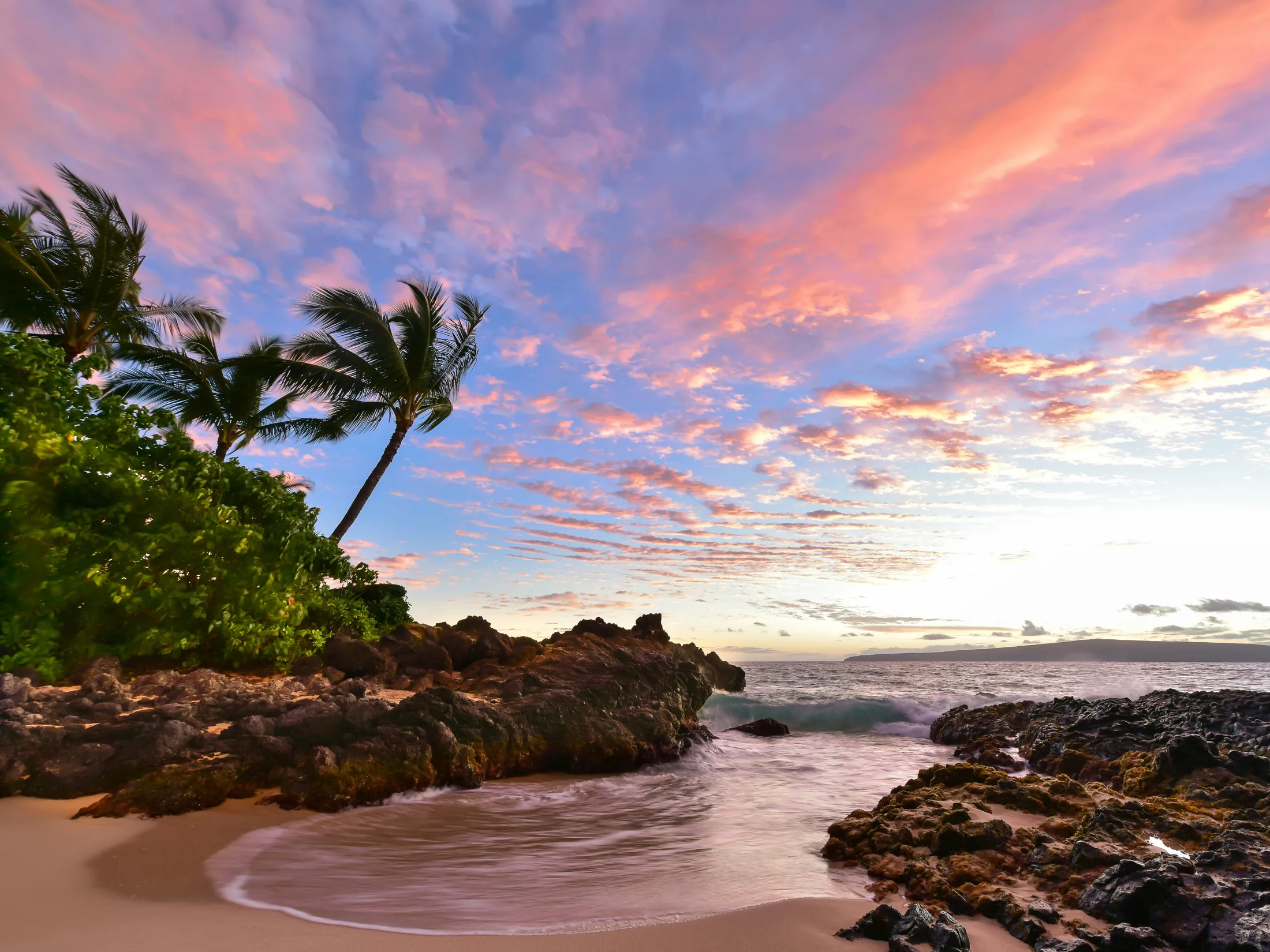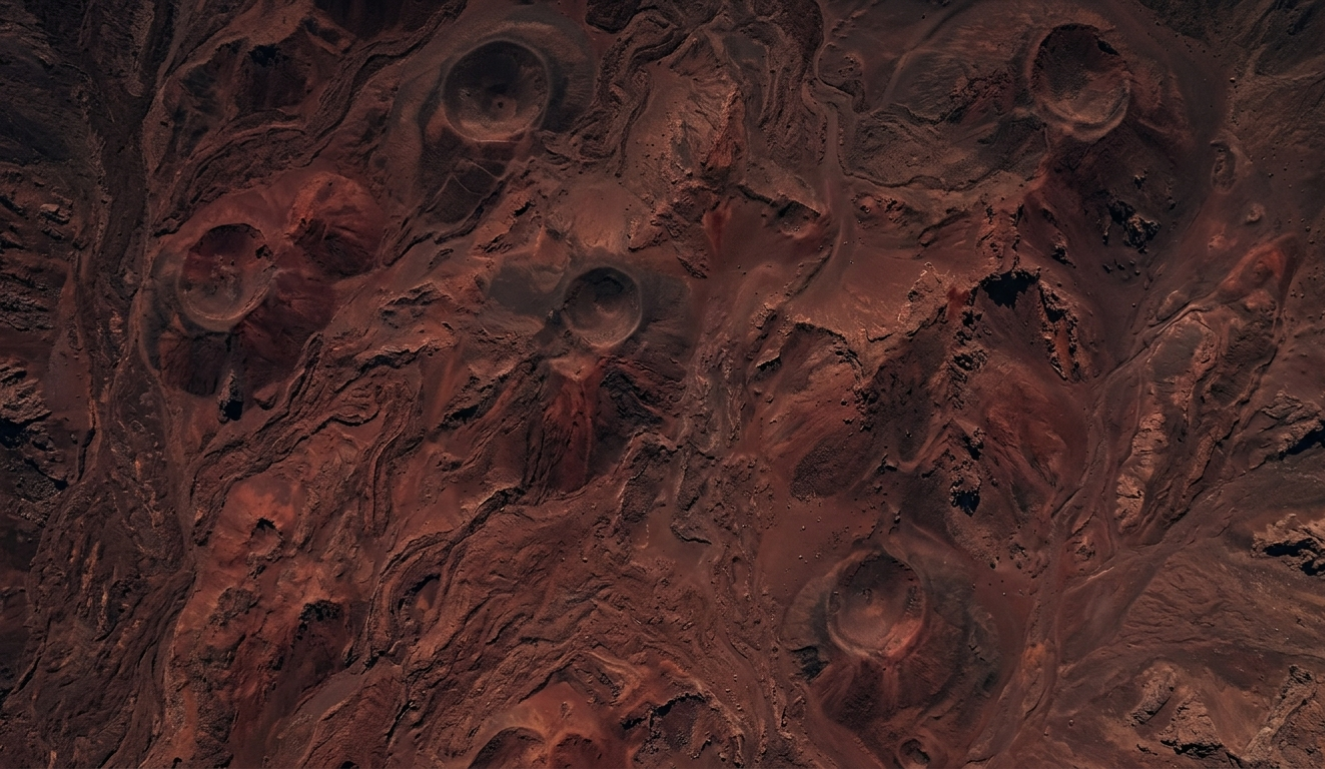


On Maui, ecology is not a background detail. It is the shape of the day.
You can leave a hot, dry beach in Kīhei, climb through pasture and eucalyptus, pass into cold air near Haleakalā’s summit, then look down toward rainforest gullies that catch the trade winds. In a short drive, Maui moves through worlds. Some of what you see arrived on wind, waves, and wings. Some evolved here and nowhere else. Some came with people and became part of Hawaiian life. Some spread so aggressively that they now threaten the plants, birds, reefs, and watersheds that make Maui feel like Maui.
The words are simple. The distinctions are useful.
Four words that make the landscape clearer
Native means a plant or animal reached Hawaiʻi without human help. Seeds floated. Birds flew. Spores blew in. Over millions of years, a small number of arrivals became the starting point for entire Hawaiian lineages. Hala, with its prop-rooted trunks and pineapple-like fruit, is a native coastal plant you may notice around the islands.
Endemic means native and found nowhere else. This can mean endemic to the Hawaiian Islands, or more narrowly, endemic to Maui or Maui Nui. The nēnē, or Hawaiian goose, is endemic to Hawaiʻi. Haleakalā’s ʻāhinahina, the silversword, is far more place-specific: a plant tied to the high volcanic slopes of East Maui.
Introduced means brought by people. That category is broad and morally complicated in the best way. Kalo, ʻulu, and other canoe plants were carried by Polynesian voyagers and became central to Hawaiian food, culture, and relationship to land. Later arrivals include pasture grasses, ornamental trees, garden plants, livestock, pets, and pests. Introduced does not automatically mean harmful.
Invasive means introduced and damaging. These species spread, outcompete native life, alter water flow, fuel fires, carry disease, or tear up habitat. On Maui, the conversation often includes axis deer, feral pigs, mosquitoes, miconia, invasive grasses, coqui frogs, and little fire ants in areas where they occur. The problem is not that they are “from somewhere else.” The problem is what they do here.
Once you have those definitions in your pocket, Maui becomes more legible. A beautiful roadside tree may be introduced. A plain-looking shrub behind a fence may be rare. A bird in a parking lot may be part of a recovery story that took decades.
Maui species worth knowing before you go
ʻĀhinahina, the Haleakalā silversword
If one plant can change how you look at a mountain, this is it. The Haleakalā silversword looks almost unreal in the high-elevation cinder landscape: a tight sphere of silver, sword-like leaves, adapted to cold, sun, wind, and volcanic soil. It can live for many years before sending up a tall flowering stalk, setting seed, and dying.
You may see silverswords in Haleakalā National Park near summit-area trails and viewpoints. Let them be strange and magnificent from where you stand.
Nēnē, the Hawaiian goose
The nēnē is Hawaiʻi’s state bird and one of the easiest endemic animals for Maui visitors to recognize. It has a buff-colored neck with dark grooves, a sturdy walk, and a habit of appearing in places where people are moving around: roadsides, lawns, parking areas, and open slopes.
On Maui, many visitors encounter nēnē in and around Haleakalā National Park. Seeing one is a small jolt of luck: an endemic bird still making its way through a human-shaped landscape.
ʻUaʻu, the Hawaiian petrel
You are less likely to see an ʻuaʻu than to benefit from knowing it exists. The Hawaiian petrel is a seabird that spends much of its life over the ocean and returns to nest in burrows high on Haleakalā. That fact alone feels like a miracle: a bird of the open sea, navigating back to a volcanic mountain under the night sky.
Much of the conservation work on Haleakalā protects species visitors may never photograph. Fences, predator control, habitat restoration, and restricted areas are part of why rare life still has a chance there.
Native forest birds
Maui’s native honeycreepers are among the island’s great evolutionary stories. Some, like ʻapapane and ʻiʻiwi, are more familiar to birders and may be seen in native forest habitat. Others, such as ʻākohekohe and kiwikiu, are much rarer and largely tied to protected East Maui forests.
For most visitors, the point is not to chase the rarest bird. It is to understand why high-elevation forests matter. Native birds evolved with native trees, especially ʻōhiʻa lehua, and many are threatened by habitat loss, introduced predators, and mosquito-borne disease. When you hear birdsong in a cool upland forest, you are hearing an older Maui than the one visible from the resort road.
Wetland birds at Keālia
Maui’s wetlands are easy to underestimate because they are not lush in the postcard sense. They can look flat, brown, windy, and quiet. Then a long-legged aeʻo, the Hawaiian stilt, steps through the shallows, and the whole place sharpens.
Keālia Pond National Wildlife Refuge is one of Maui’s best places to appreciate native wetland birds without needing a deep naturalist background. Depending on conditions and season, you may see aeʻo, ʻalae keʻokeʻo, migratory shorebirds, and other waterbirds using the ponds and mudflats. Wetlands reward slow looking.
Honu, monk seals, and whales
Not every native animal on Maui is endemic. Honu, the green sea turtle, is native to Hawaiʻi and often seen resting or feeding near shore. Hawaiian monk seals are endemic to Hawaiʻi and occasionally haul out on beaches. Humpback whales are seasonal visitors to Maui waters, generally associated with winter and early spring.
These encounters can be the highlight of a trip precisely because they are unscripted. The best wildlife moment is the one that does not require the animal to react to you.
Introduced does not mean “bad,” and native does not always mean “obvious”
One of the pleasures of learning Maui’s ecology is giving up simple categories.
The purple jacaranda blooms upcountry are beloved, but jacaranda is introduced. Eucalyptus groves can smell wonderful after rain, but many eucalyptus were planted. Ironwood along the coast may frame a beach beautifully, but it is not an old Hawaiian shoreline forest.
Meanwhile, native and endemic plants may be smaller, quieter, and easier to miss. A rare shrub inside a restoration area may not compete with a flowering ornamental for your attention. A dryland native plant may look sparse because it is built for drought, not drama.
That is part of the lesson. Hawaiʻi’s native ecosystems did not evolve to impress visitors at 45 miles per hour. They evolved in isolation, through specialization, with fewer mammals and different pressures than continental landscapes. Maui’s native life often asks you to slow down.
Invasive species visitors may hear about on Maui
You do not need to become an ecologist before vacation. But a few names help explain what conservation signs, boot-brush stations, and restoration fences are about.
Axis deer are widely discussed on Maui because they damage native vegetation, farms, and dry landscapes. In dry areas, heavy grazing can leave soil exposed and make it harder for native plants to recover.
Feral pigs root through wet forests, disturbing soil and creating openings for weeds. Their wallows can also create mosquito habitat, which matters for native forest birds.
Mosquitoes are not just a nuisance in Hawaiʻi. Some carry avian diseases that native honeycreepers did not evolve to withstand. As temperatures shift, higher-elevation refuges become more important and more vulnerable.
Miconia is an introduced tree with large leaves that can shade out native plants and alter watershed function. Invasive grasses can change how fire moves through dry and disturbed landscapes.
The point is not to turn every hike into a worry list. It is to recognize that Maui’s beauty is actively being managed, restored, and defended by people who know these landscapes intimately.
Good places to make the ideas real
Haleakalā National Park is the clearest place to understand Maui’s elevation story. The summit area brings you into alpine and subalpine habitats where silverswords, nēnē, and high-elevation conservation come into focus. Hosmer Grove and nearby forested areas can be rewarding for birders.
Maui Nui Botanical Gardens in Kahului is especially useful for travelers who want plant names to become more than labels. It helps distinguish native Hawaiian plants, endemic species, and culturally important Polynesian-introduced plants without requiring a backcountry hike.
Keālia Pond National Wildlife Refuge gives a different kind of lesson: wetlands, migration, shorebirds, and the importance of places that may not look lush at first glance.
Coastal pullouts and beaches can become informal wildlife classrooms when turtles, monk seals, or whales are present.
A better way to see Maui
Learning the difference between native, endemic, introduced, and invasive does not make Maui less beautiful. It makes the beauty more interesting.
The silversword is no longer just a silver plant near the summit. It is a Maui original, built for altitude and patience. The nēnē is not just a goose in a parking lot. It is an endemic bird still negotiating a human-shaped world. The wetland that looked empty from the highway becomes habitat. The dry hillside becomes a clue. The forest birds you hear but cannot name become part of a much older story.
That is the reward: not expertise, necessarily, but attention. Maui gives plenty to the casual eye. It gives even more when you know what you are looking at.
Further Reading
A few relevant next steps from Alakai Aloha.
 BlogMaui Wildlife Watching, Done With Respect
Where to watch Maui’s whales, nēnē, shorebirds, and honu from respectful distances, with simple ways to enjoy native wildlife without crowding it.
Editor's pick ActivityHaleakalā National Park
Explore Haleakalā National Park, encompassing the dormant volcano's summit for breathtaking sunrises, sunsets, and stargazing, alongside the lush Kīpahulu District's waterfalls and pools.
Editor's pick ActivityKeālia Pond National Wildlife Refuge
Explore Keālia Pond National Wildlife Refuge, a critical wetland sanctuary on Maui, offering exceptional birdwatching, nature photography, and educational insights into endangered Hawaiian waterbirds and diverse migratory species.
Editor's pick BlogA Pono Guide to Hiking Maui’s Wild Trails
Learn how to choose legal trails, read Maui’s changing conditions, respect cultural places, and care for fragile coast, forest, and Haleakalā landscapes.
Editor's pick