

The first clue may be that the “rock” on the beach is breathing.
On Maui, a Hawaiian monk seal sighting is not something to schedule your day around. It is more like being let in on a quiet moment: a large, gray-brown seal asleep on warm sand at Mākena, a head surfacing beyond the reef, a shape moving through clear water near a snorkel site and then vanishing again. Most visitors will not see one. If you do, it will probably be unexpected — and all the better for it.
The Hawaiian monk seal, or ʻīlioholoikauaua, is one of Hawaiʻi’s native marine mammals and one of the rarest seals in the world. Maui does not have the same steady sighting pattern that some other islands do, but monk seals do pass through Maui waters and occasionally haul out on its beaches. Knowing how to recognize one, where sightings have happened, and what to do when one appears helps keep the encounter calm for everyone — especially the seal.
Meet the ʻīlioholoikauaua
ʻĪlioholoikauaua is often translated as “dog that runs in rough water,” a name that feels exactly right once you see a seal moving through surf with heavy, easy confidence. The Hawaiian monk seal is endemic to Hawaiʻi, meaning it is found nowhere else in the world.
Adults are usually about 6 to 7 feet long and several hundred pounds, with a rounded head, large dark eyes, a short whiskered muzzle, and no visible ear flaps. That last detail helps separate them from sea lions. Monk seals are “true seals,” built more for swimming than walking; on land they inch and roll and scoot, which can make them look awkward until they reach the water.
Their coats range from brownish gray to silvery gray, often with a lighter belly. They can look mottled, patchy, or even greenish before they molt. Once a year, monk seals shed the outer layer of fur and skin in a relatively short period. If a resting seal looks ragged, it may not be injured at all — it may simply be molting.
Pups are easier to identify. Newborn monk seals have a dark, woolly black coat and are usually seen close to their mothers. Mother-pup pairs need much more space, and they may remain on a beach for an extended nursing period.
What they are doing on Maui
Monk seals spend much of their lives at sea, foraging around reefs and deeper nearshore habitat. They eat animals such as reef fish, eels, octopus, lobster, and other bottom-dwelling prey. They are not chasing mahimahi or tuna in the open blue; they are working reef edges, sandy bottoms, ledges, and caves in the way a seal has learned over thousands of years in Hawaiian waters.
When a monk seal comes ashore, it is usually not stranded. Most of the time, it is resting. Seals haul out to sleep, sun, molt, and sometimes give birth. They may stay in one place for hours, and occasionally longer, before returning to the ocean.
That can be surprising on a busy Maui beach. A seal may choose a sandy place near families, snorkelers, umbrellas, and afternoon walkers with no regard for how public the setting feels to us. From the seal’s point of view, the beach is part of its home range too.
Where monk seals have been seen on Maui
There is no reliable “monk seal beach” on Maui, and that is worth saying plainly. If a tour, beach plan, or social media post makes a seal sighting sound likely, temper your expectations. Encounters here are uncommon.
That said, sightings have occurred on both West Maui and South Maui. In West Maui, seals have been reported around Kāʻanapali, including the Puʻu Kekaʻa area often called Black Rock, as well as Lahaina-side beaches. These are busy visitor corridors, which is why a hauled-out seal can quickly attract attention. If you come across a loose semicircle of people staring at the sand, pause before walking closer; the center of attention may be a sleeping seal.
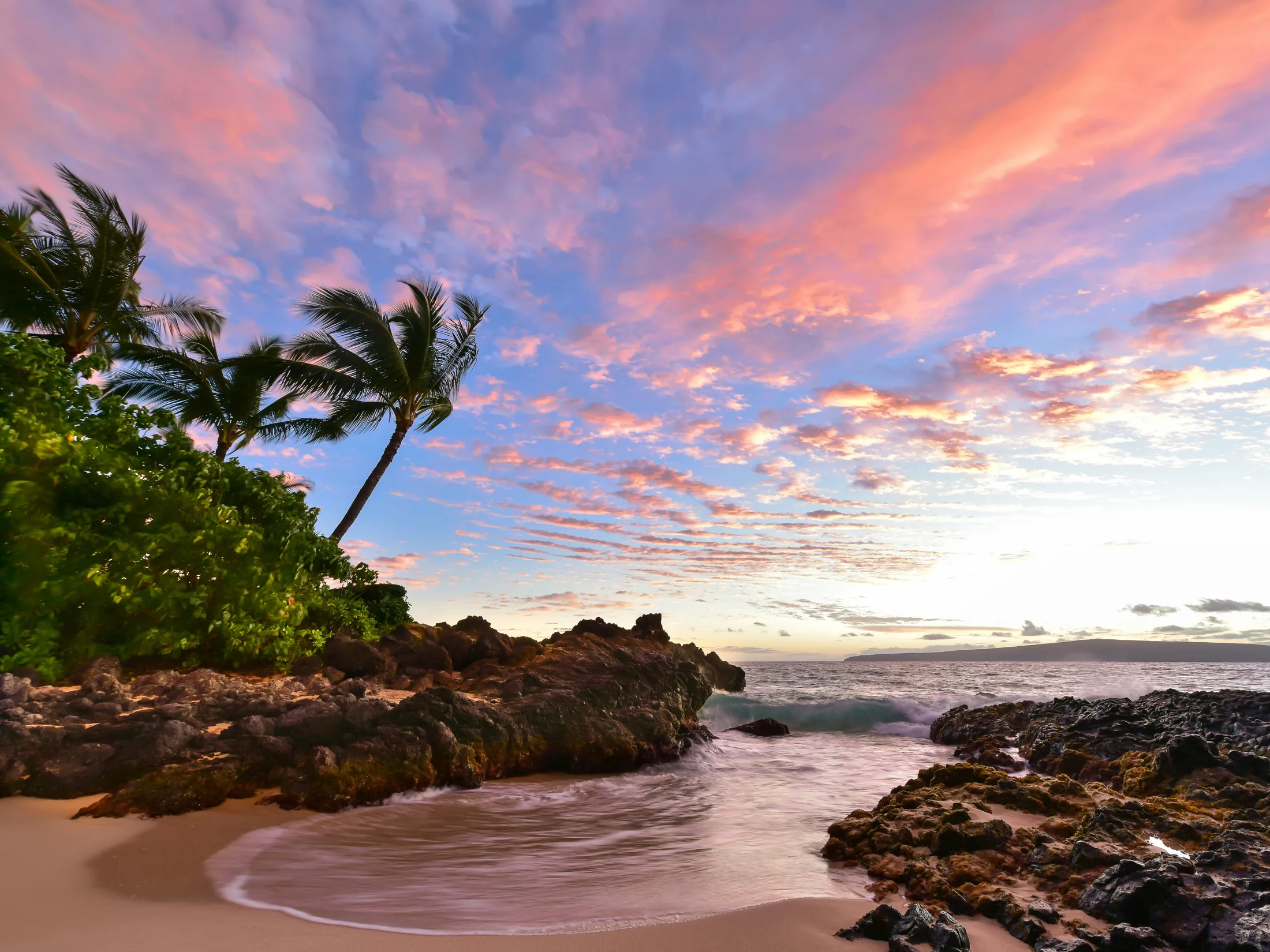
In South Maui, monk seals have been observed around Mākena and nearby reef areas. Snorkelers and boaters have also occasionally reported monk seals around Molokini and “Turtle Town” near Maluaka. Those ocean encounters are rare and not something to pursue. If you happen to see one while snorkeling, stop moving toward it, give it room, and let it pass.
The broader lesson is that monk seals can appear almost anywhere along Maui’s shoreline — sand, rock, resort beach, remote cove, or offshore reef. You are not hunting for them so much as leaving room in your beach day for the possibility.
Is there a best season?
Monk seals do not migrate in the way humpback whales do, so a sighting is possible in any month. Spring into summer overlaps with peak pupping season in Hawaiʻi, which means beachgoers should be especially attentive to any roped-off area, posted sign, or mother-pup pair.
For travelers, the more useful seasonal question is not “When are seals guaranteed?” — never — but “When am I likely to spend time near calm water and long beach days?” Monk seals keep their own schedule. Consider any sighting a bonus, not the point of the outing.
How to view one without making a scene
A sleeping monk seal can look almost comically relaxed, but it is still a wild endangered animal. The best viewing is low-key: stop, notice, take a photo from where you are, and keep moving if the beach is crowded.
NOAA’s general viewing guidance is to stay at least 50 feet from a monk seal — about the length of a standard school bus. For a mother and pup, stay at least 150 feet away. If signs or ropes are present, use those boundaries instead of guessing.
A few practical habits make this easy:
Use your camera zoom rather than your feet. Keep children and pets from wandering closer. Do not stand between the seal and the ocean. If you are in the water, do not swim toward the seal or try to follow it. Keep voices and sudden movements down near a resting animal.
None of this needs to feel tense. Think of it as giving the seal a quiet room. The beach can still be enjoyed; the animal just gets a piece of it undisturbed.
If the seal needs help
Most monk seals on the beach are fine. Sleeping is not an emergency. Molting is not an emergency. Looking lumpy, sandy, scarred, or impressively lazy is usually not an emergency either.
But if something seems clearly wrong — fishing line, netting, an obvious wound, a seal being crowded or touched, a pup separated from its mother, or people trying to push the animal back into the water — report it.
On Maui, you can call:
NOAA Marine Wildlife Hotline: 1-888-256-9840 Maui Ocean Center Marine Institute monk seal response line: 808-292-2372
Helpful details include the beach name, nearest landmark, time of sighting, whether the seal is on sand or in the water, and what you observed. If you can safely take a photo from a distance, that may help responders identify the animal. After that, let the trained teams take over.
A living part of Hawaiʻi, not a beach attraction
It is easy to reduce monk seals to their charm. They are round-faced, sleepy, and photogenic in the way only a sun-drunk seal can be. But ʻīlioholoikauaua carries deeper meaning than “cute animal on vacation.”
The Hawaiian name reflects close observation of ocean life, and monk seals belong to the same living seascape as reefs, winds, currents, fishponds, voyaging routes, and shoreline gathering places. Seeing one on Maui is a reminder that the island is not a backdrop. It is habitat.
That understanding does not require visitors to perform solemnity at the beach. Enjoy the surprise. Point it out softly to your travel companions. Let your kids see it from a respectful distance. Take the photo you will actually want later — the one with the seal at peace, not the one taken too close.
A monk seal sighting on Maui is best treated as a gift you do not try to unwrap all the way.
Plan your beach day for the beach itself: the morning light in Kīhei, the clear water off South Maui, the long curve of sand in West Maui, the pleasure of doing very little for an hour. If an ʻīlioholoikauaua appears, let the day widen around it. Step back. Watch well. Make the call if help is needed. Then leave the animal with the quiet it came ashore to find.
That is the whole art of it — not complicated, not performative, just attentive. On an island where so much beauty asks to be approached, the monk seal asks for the opposite: enough space to remain itself.

Further Reading
A few relevant next steps from Alakai Aloha.
 BlogMaui Honu and How to See Them Responsibly
Learn what honu mean in Hawaiʻi, where Maui turtle encounters often happen, and how to watch from a respectful, legal distance.
Editor's pick GuideBest Maui Whale Watching Tours
A guide to Maui whale watching tours.
Editor's pick BlogMaui’s Pueo and the Open Country They Keep
Learn where pueo fit into Maui’s open landscapes, what they mean in Hawaiian culture, and how to recognize and view them without causing harm.
Editor's pick BlogMaui’s ʻIwa, the Bird That Rides the Wind
Learn how to spot Maui’s ʻiwa by silhouette, understand its wind-riding behavior and cultural meaning, and choose respectful places to watch from shore.
Editor's pick