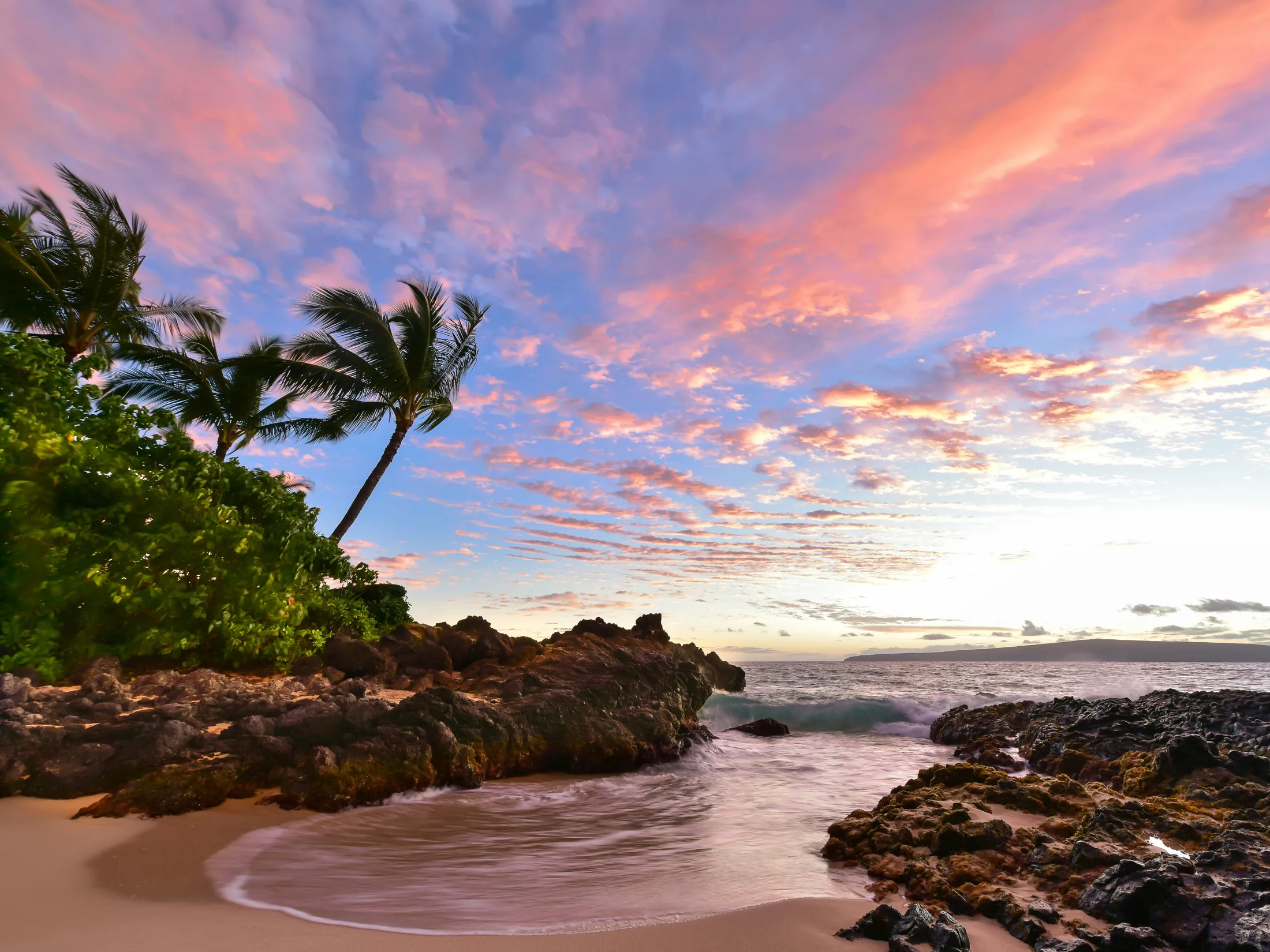


Maui makes beach decisions feel deceptively easy. You see blue water, soft sand, maybe a few snorkelers floating over reef, and the question seems settled: of course you can swim here.
Sometimes that’s true. Maui has many beaches where a calm morning swim is one of the great pleasures of the island. But “can you swim here?” is never answered by the beach name alone. It depends on the season, swell direction, wind, tide, and the exact part of the beach where you plan to enter.
The good news: you do not need to become an ocean expert. You just need to read Maui’s beaches the way locals and ocean-minded visitors do — not as static attractions, but as places with moods.
The Maui rule of thumb: start leeward, then check the day
For many visitors, the easiest swimming days are on Maui’s leeward coasts: West Maui and South Maui. These areas are generally more sheltered from the trade winds and often have clearer, calmer mornings.
That does not mean they are always safe. Winter north and northwest swells can wrap into West Maui and make normally friendly bays rough. Summer south swells can turn South Maui beaches from gentle to punchy. Afternoon trade winds can ruffle the surface and make snorkeling less comfortable even when the surf is not large.
North Shore and East Maui beaches are different. They can be gorgeous places to watch waves, walk, take photos, or sit with coffee after the drive to Hāna — but they are less consistently suited to casual swimming. When in doubt, treat those beaches as scenic first and swimming beaches only when conditions are obviously mellow.
How to decide in five minutes
Before you spread out the towel, pause. Check surf and beach conditions before you go, including surf height, swell direction, wind, and posted advisories. Once you arrive, trust what you see more than what you hoped to see.
Watch the water for a few minutes. Are waves breaking hard right on the sand? Is there a channel of churning, foamy water moving away from shore? Are people drifting down the beach faster than they realize? Are only strong swimmers or surfers out? Those are signs to choose a different spot or keep it to ankle-deep lounging.
A beach with a lifeguard tower is a good choice when you are unsure, especially with kids or less confident swimmers. Read posted signs, look for flags, and ask the lifeguard the simplest question: “Is this a good place to swim right now?”
Match the ocean to the weakest swimmer in your group. If one person is nervous, tired, or not used to waves, pick the gentler beach. Maui has plenty of ways to have a perfect beach day without turning every stop into a swim test.
West Maui beaches where swimming is often easier
These are not guarantees. Think of them as starting points — beaches that are often good candidates when conditions are normal.
Kapalua Bay
Kapalua Bay is one of West Maui’s better-known calm-water choices for a reason. Its crescent shape and rocky points can take the edge off the ocean, creating a pleasant place for floating, swimming, and snorkeling when the water is settled.
It is still a real ocean bay. In winter, or during a swell that wraps into West Maui, the bay can become rougher than it looks from the parking area. If waves are breaking through the middle of the bay or visibility looks milky, save snorkeling for another time.
Napili Bay
Napili has an easygoing vacation feel: a sandy bay, clear water on good days, and a straightforward setup for swimming. It is often enjoyable for confident beginners when the surf is small.
The main thing to watch is shorebreak. Even modest waves can land with force on a sloped sandy beach, especially for children or anyone standing knee-deep with their back to the ocean. If sets are thumping onto the sand, shift into “sit, watch, and enjoy” mode or pick a more protected cove.
Kaʻanapali Beach and Puʻu Kekaʻa
Kaʻanapali is long, beautiful, and busy, with many visitors entering the water straight from the resort zone. Swimming can be excellent when the ocean is calm, but the beach is not uniform. Some sections drop off more quickly, and the water near rocky points can have more movement than a casual swimmer expects.
Around Puʻu Kekaʻa, often called Black Rock, stay conservative if you are snorkeling. Conditions around the point can change, and currents can feel different there than they do over the sand. For many travelers, the best version of Kaʻanapali is a morning swim close to shore, followed by a long walk on the sand.
Kahekili Beach Park
Kahekili, north of the main Kaʻanapali resort strip, is popular with snorkelers because reef begins close to shore. On calm mornings, it can be rewarding without requiring a long swim.
That closeness is also the caution. Reefs can be shallow, and afternoon wind can make the surface choppy. If the water looks stirred up, visibility is poor, or wind is building, choose swimming over the sand rather than snorkeling over the reef — or come back another morning.
South Maui beaches that often work well
South Maui is where many families find their rhythm: beach in the morning, lunch in Kīhei or Wailea, maybe a second swim if the wind stays down. It is also the part of Maui most affected by summer south swells, so do not assume calm water just because you are in Kīhei.
Kamaole I, II, and III
Kamaole I, Kamaole II, and Kamaole III are practical, sandy, and easy to love. They have broad entries, grassy areas behind the beach, and enough space that families can settle in without needing an elaborate plan. When conditions are mild, these are among the most straightforward South Maui swim beaches.
Each has its own personality, and the rocky ends can be fun for looking at fish when the water is clear. Across all three, watch the shorebreak and the wind. If waves are dumping onto the sand, small children can get knocked over in very shallow water. If afternoon trades are up, the water may be better for a quick dip than a relaxed snorkel.
Keawakapu Beach
Keawakapu stretches between Kīhei and Wailea with a graceful, less boxed-in feel than some resort-front beaches. On a calm morning, it is a fine place for a long swim parallel to shore or a gentle float with views back toward Haleakalā.
Because it is a longer beach, conditions can vary by section. Look for the mellowest entry, avoid rocky areas if the water is moving, and be aware that wind can change the mood quickly.
Ulua and Mokapu
Ulua and Mokapu sit beside each other in Wailea and are popular with snorkelers, divers, and morning swimmers. When the ocean is flat, the reef around the point can be full of life, and the sandy entries make the beaches feel accessible.
The tradeoff is popularity and reef proximity. Go early for calmer water and a more relaxed scene. If a south swell is running, if waves are pushing across the reef, or if the tide leaves coral very shallow, make it a beach morning rather than a snorkel session.
Maluaka Beach
Maluaka, in the Mākena area, is often mentioned by snorkelers because turtles are commonly seen along parts of this coastline. It can also be a lovely swim beach in settled conditions, with a softer, more spacious feel than busier resort beaches.
As always, let the day decide. Wind can arrive, visibility can fade, and the ends of the beach can have more reef and movement.
Beaches to treat with extra caution
Some Maui beaches are better thought of as “look first, swim later — maybe.”
Mākena Big Beach
Big Beach is magnificent in scale: wide sand, big sky, and a feeling of space that is harder to find in the resort zones. It is also known for powerful shorebreak. Waves can rise and unload close to shore with surprising force, even when the day looks sunny and friendly.
Strong, experienced ocean swimmers may enter when conditions are small and lifeguards indicate it is reasonable. For many visitors, Big Beach is best for walking, sunning, and watching the ocean do what it does.
Hoʻokipa
Hoʻokipa is a North Shore classic for watching surfers, windsurfers, and the rawer side of Maui’s ocean. It is not usually the place to take visiting children for a casual swim. Conditions can be strong, reefy, windy, and crowded with skilled ocean users.
Go for the view, the wave-watching, and the sense of place. Swim elsewhere unless the conditions are clearly calm and you know exactly where it is appropriate to enter.
Hāna-area beaches
East Maui beaches such as Hāmoa, Koki, and Waiʻānapanapa can be unforgettable stops, but they are not all-purpose swim beaches. Surf, currents, rocks, and changing conditions matter a lot here. Hāmoa can be swimmable on gentle days and rough on others. Waiʻānapanapa’s black sand and lava-rock setting are dramatic, but that does not automatically make it a comfortable place to swim.
After the long drive, it is tempting to get in anywhere that looks beautiful. Take a slower approach in Hāna: watch the water, read signs, notice where locals are entering, and be content with a foot rinse, a beach walk, or sitting in the shade.
If you have kids or hesitant swimmers
Maui beach days with children are best when you lower the ambition a little. Pick sandy entries. Choose mornings. Stay where everyone can stand comfortably. Bring goggles instead of promising a big snorkel. Let the first swim be short, happy, and easy.
The Kamaole beaches, Kapalua on a calm day, and certain Wailea-area beaches often work well for this kind of relaxed family swimming. The exact beach matters less than the conditions in front of you. A small, mellow swim at the right beach beats a stressful outing at the famous one.
When the beach you chose is not a swimming beach today
This happens all the time on Maui, and it does not mean the day is spoiled. Shift the plan.
If West Maui is rough from winter swell, look at more protected pockets or consider South Maui. If South Maui is feeling the push of a summer swell, try a different stretch of coast, look for a lifeguarded sandy beach with smaller waves, or make it a pool-and-sunset day. If afternoon wind ruins snorkeling, go early the next morning rather than forcing it.
Some of Maui’s best beach memories come from not insisting: coffee after a sunrise swim, a sandy walk while the surf is up, kids digging at the waterline, watching sets roll in from a safe perch. The ocean is still part of the day even when you do not go far into it.
The real answer
Can you swim here on Maui?
Often, yes — especially on calm mornings along West and South Maui’s more protected beaches. But the better question is: can you swim here today, in this exact spot, with the people you brought?
If the water is clear, the waves are small, the entry is sandy, other swimmers look relaxed, and your least confident swimmer feels good, you may have found your beach for the morning. If the ocean looks loud, messy, steep, or uncertain, Maui gives you permission to choose again.
That is how you get the kind of beach day you came for: warm water, easy laughter, salt on your skin, and no need to prove anything to the sea.

Further Reading
A few relevant next steps from Alakai Aloha.
 BlogMaui’s Best Adventures for Every Season
Plan Maui by season, coast, and time of day, from winter whale watching and leeward beach mornings to summer south shore swells and misty Upcountry escapes.
Editor's pick ActivityKaanapali Beach
Kaʻanapali Beach, a renowned three-mile stretch of white sand in West Maui, offers clear turquoise waters perfect for swimming, sunbathing, and snorkeling at Black Rock, plus a daily sunset cliff diving ceremony.
Editor's pick ToolCompare island weather by region
See how rain, wind, and conditions vary around the island before you choose your day plan.
Useful planning tool ActivityKeawakapu Beach
Keawakapu Beach offers nearly a mile of golden-white sand and clear, calm waters, perfect for swimming, snorkeling, and relaxing away from the busiest crowds in South Maui.
Editor's pick